
WELCOME BONUS 300%
UP TO €2000 + 100
FREE SPINS
UP TO €2000 + 100
FREE SPINS
Home → Blackjack
Blackjack at Duel Casino: Variants, Rules and Payouts
Clicked Too Late: Hand Is Automatically Held
At Blackjack tables, a player's hand is automatically held if their action is registered after the dealer has already checked for a Blackjack. This rule applies across various blackjack variants, ensuring fair play and consistent game flow, particularly in mobile environments where input lag can occur. Players should therefore aim to make their decisions promptly.
This automatic hold differs from standard play where a player's input before the dealer's check dictates the hand's progression. For instance, in Blackjack 6 Decks, S17, DAS, DOA with an RTP of 99.54%, a player's timely decision allows for strategic plays like doubling down or splitting, which might be missed if the click is too late.
The consequence for the player is a loss of strategic options, potentially leading to a worse outcome than if the action had been registered on time. This is especially critical in games like Blackjack Liberal Vegas Strip (RTP 99.72%), where maximizing strategic opportunities is key to achieving the low house edge of 0.28%.
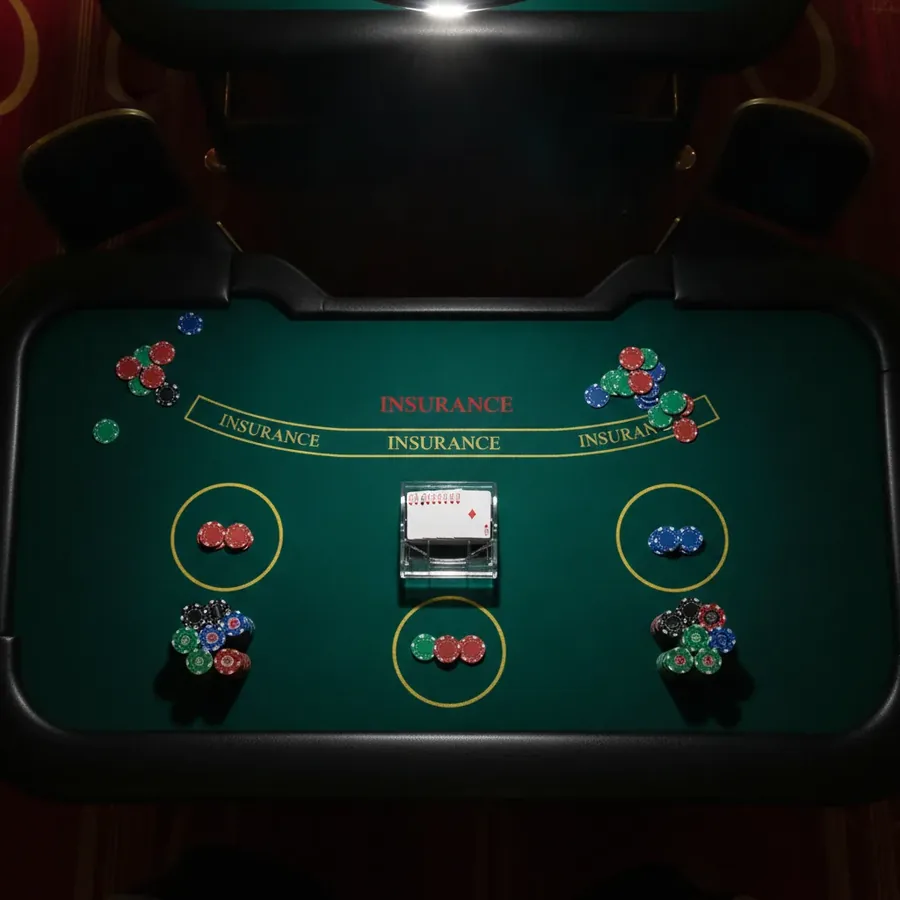
Seat change at the Live Table in 20 seconds
For players utilising the mobile platform, a swift seat change is possible at live dealer tables, taking approximately 20 seconds. This feature is available on select live blackjack offerings, such as Infinite Blackjack by Evolution, which supports an unlimited number of players. This ensures minimal disruption to the gaming session.
This rapid transition contrasts with some older live casino systems where a seat change might require waiting for the next shoe or a significant delay. For example, a game like Blackjack Party, also by Evolution, might offer a more social atmosphere but could have different seat availability dynamics. The 20-second timeframe is designed for efficiency.
The benefit to the mobile player is the ability to quickly switch tables or games if a preferred seat becomes available or if they wish to try a different live blackjack variant. This immediacy helps maintain engagement and allows players to capitalize on opportunities, such as joining a table with favourable betting limits, for instance, the €1 - €5,000 range on Quantum Blackjack Plus Live.
16 vs 10 played incorrectly: most common error
A frequent strategic error observed, particularly when playing on mobile devices where visual cues can be smaller, involves playing a hand of 16 against a dealer's upcard of 10. The mathematically optimal strategy dictates hitting this hand, a crucial decision impacting the house edge.
Incorrectly standing on 16 against a 10 can significantly increase the house advantage compared to optimal play. For example, in a game like Blackjack 6 Decks, S17, DAS, DOA (RTP 99.54%), failing to hit a 16 against a 10 deviates from basic strategy, which aims for the 0.46% house edge.
This common mistake can lead to more frequent losses, as the dealer's 10 is a strong card likely to form a high total. Mastering basic strategy, even on a smaller screen, is paramount for players aiming for the best possible RTP, such as the 99.57% offered by Playtech's Quantum Blackjack Plus Live.
Which hands are excluded from Surrender?
The Surrender option, where a player can forfeit half their bet after the dealer checks for Blackjack, is not universally available on all hands. Specifically, this option is generally not applicable when the player has a soft hand, meaning a hand containing an Ace counted as 11.
This exclusion is a standard rule in most blackjack variants, including those with favourable rules like Blackjack Liberal Vegas Strip (RTP 99.72%). Late Surrender, which allows players to surrender after the dealer checks for blackjack, improves RTP by approximately 0.08% when utilized correctly, but it is not an option for all hands.
For mobile players, understanding these limitations is key to managing their bankroll effectively and avoiding missed opportunities. While not all hands qualify for surrender, knowing which ones do not allows players to focus on other strategic plays, such as doubling down or splitting, within the available game rules.
Continuous Shuffling Machine shuffles after each round
The implementation of a Continuous Shuffling Machine (CSM) means that cards are shuffled after every single round in certain blackjack games. This technology is frequently employed in online blackjack, including live dealer variants, to expedite gameplay and prevent card counting.
This differs from traditional shoe games where shuffling occurs after several decks have been dealt. For instance, Blackjack Insurance, which uses 6–8 decks, would typically not employ a CSM if played in a physical casino setting, offering different strategic considerations. The CSM's constant shuffling affects the game's rhythm.
For players focused on mobile play, the CSM ensures that each hand is independent, removing the advantage of tracking cards from previous rounds. While games like Blackjack 6 Decks, S17, DAS, DOA (RTP 99.54%) might offer favourable rules, the CSM mitigates card-counting strategies, meaning players rely purely on basic strategy for the 0.46% house edge.
Blackjack variants at a glance
| Variant | Payout | House edge | Rule | Bet range |
|---|---|---|---|---|
| Blackjack Ein Deck, klassische Regeln, 3:2 | 99.85% | 0.15% | Weniger Decks = niedrigerer Vorteil; ein Deck gibt ca. −0.48 Prozentpunkte gegenüber 8 Decks. Oft durch 6:5 Auszahlung kompensiert. | Blackjack 3:2, Gewinn 1:1 |
| Blackjack Liberal Vegas Strip (liberale Regeln, 3:2) | 99.72% | 0.28% | Günstigste Regelkombination: S17 + DAS + Resplit + Late Surrender. Standardabweichung 1,15 | Blackjack 3:2, Gewinn 1:1 |
| Blackjack Split / Double / H17 – Regel-Effekte | n.a. (Regel-Modifikatoren) | H17 +0.22 Prozentpunkte; RSA −0.08 Prozentpunkte; DAS −0.14 Prozentpunkte | Dealer Hits Soft 17 verschlechtert RTP um 0.22 Prozentpunkte; Resplit Aces verbessert um 0.08 Prozentpunkte; Double After Split verbessert um ca. 0.14 Prozentpunkte; 6 Decks statt 8 – ca. 0.02 Prozentpunkte. | Double – Einsatz ×2 mit einer Karte; Split – bis 4 Hände; Ass-Split meist mit einer Karte. |
| Blackjack Auszahlung 6:5 statt 3:2 (6 Decks) | 98.15% | 1.85% | Ersatz von 3:2 durch 6:5 fügt exakt +1.39 Prozentpunkte zum Vorteil des Casinos hinzu – stärker als jede andere Regeländerung. Bei $10 Einsatz zahlt Blackjack $12 statt $15. | Blackjack 6:5, Gewinn 1:1 |
| Blackjack Surrender (Late Surrender) – Regel-Effekt | n.a. (Regel-Modifikator) | −0.08 Prozentpunkte | Spieler gibt Hand nach Dealer-Blackjack-Prüfung auf, verliert die Hälfte des Einsatzes. Verbessert RTP um ca. 0.08 Prozentpunkte. Early Surrender ist wesentlich wertvoller (bis −0.6 Prozentpunkte), aber extrem selten. | Rückzahlung 50% des Einsatzes |
| Blackjack 6 Decks, S17, DAS, DOA, Auszahlung 3:2, Basisstrategie | 99.54% | 0.46% | Dealer steht auf Soft 17; Verdopplung auf jeder Zweierkarte; Verdopplung nach Split erlaubt; keine Aufgabe. Basisstrategie ist für diesen Wert zwingend | Blackjack 3:2, normaler Gewinn 1:1, Insurance 2:1 |
Splitting tens costs expected value: better stand
Splitting tens, a common action in some blackjack variants, can negatively impact expected value. For instance, in Blackjack Liberal Vegas Strip with liberal rules and a 3:2 payout for blackjack, splitting tens would reduce the RTP from 99.72%. This is because pairs of tens typically have a high probability of forming strong hands, and splitting them disperses this potential.
While splitting pairs like Aces can improve RTP, as seen with Resplit Aces improving it by approximately 0.08 percentage points, splitting tens does not offer a similar benefit. The inherent strength of two ten-value cards combined often outweighs the potential of two separate, weaker hands that can result from a split. This contrasts with situations where splitting is strategically advantageous.
Players aiming to maximise their return should avoid splitting tens. This strategic decision is particularly relevant on mobile devices where quick decisions are made; understanding this nuance can prevent unnecessary loss of expected value. The overall house edge can increase if such suboptimal plays are frequently executed, especially when compared to games with a lower house edge like Blackjack Ein Deck, which has a 0.15% house advantage.
Bonus conditions often exclude Blackjack completely
The 300% welcome bonus up to €2,000 plus 100 free spins at this casino comes with specific wagering requirements that can affect table game players. While slots contribute 100% to bonus turnover, table games, including blackjack, often contribute a significantly lower percentage. This discrepancy means players focusing on blackjack will need to wager considerably more to meet the bonus conditions.
Blackjack's contribution rate to bonus turnover is typically set at 10%, as indicated in the general terms. This means for every €100 wagered on slots, €100 counts towards the wagering requirement, whereas €100 wagered on blackjack only counts as €10. Consequently, a player aiming to clear a €2,000 bonus from blackjack would need to wager €20,000, compared to €2,000 on slots.
This low contribution rate effectively excludes most blackjack players from benefiting from the welcome bonus. Players should be aware that while games like Quantum Blackjack Plus Live boast a high RTP of 99.57%, their contribution to bonus wagering remains minimal. This makes it impractical to use blackjack as the primary method for clearing bonus funds.
Error insurance: 7 percent additional house edge
Blackjack Insurance, a side bet offered when the dealer shows an Ace, presents a substantial house edge. This bet allows players to wager up to 50% of their main bet that the dealer has blackjack, paying out at 2:1. However, the RTP for this bet, when played with 6-8 decks, is a mere 92.53%, translating to a significant 7.47% house advantage.
This house edge is considerably higher than that of standard blackjack variants. For example, Blackjack Liberal Vegas Strip has a house advantage of only 0.28%, and even Blackjack 6 Decks with S17, DAS, DOA, and a 3:2 payout has a house advantage of 0.46%. The insurance bet's elevated house edge makes it a detrimental choice for most players.
Basic strategy dictates always declining the insurance bet, unless card counting significantly increases the true count to +3 or higher. The substantial difference in house edge between the main game and the insurance bet, as highlighted by the 7.47% versus less than 1% for optimal blackjack, underscores why it is considered an error for players to take it.
What Hole Card Means at a Live Table
At a live blackjack table, the dealer's 'hole card' is the card dealt face down. The dealer only reveals this card after all players have completed their actions, such as hitting, standing, doubling, or splitting. This is a standard rule in most blackjack variants, including those found at live tables like Infinite Blackjack.
The significance of the hole card becomes apparent when considering the dealer's potential hand. If the hole card is an Ace or a ten-value card, there is a higher probability of the dealer achieving blackjack. This knowledge is crucial for players deciding on actions like doubling down or splitting pairs, as it influences the risk assessment for each move.
In games like Quantum Blackjack Plus Live, while the RTP is high at 99.57% with optimal strategy, the fundamental rules regarding the hole card remain consistent. Understanding its role is paramount to applying correct basic strategy and making informed decisions, particularly when faced with the dealer showing a potentially strong upcard. The presence of side bets, such as Any Pair or 21+3 on Infinite Blackjack, also adds layers of complexity to strategic play.
Blackjack Payout 3:2 Explained in Detail
A 3:2 payout for blackjack is a fundamental aspect of favourable blackjack variations, meaning a player receives €3 for every €2 wagered when achieving a natural blackjack (an Ace and a ten-value card on the first two cards). This payout structure is superior to a 6:5 payout, where a blackjack on the same €2 bet would only yield €2.40.
The difference between a 3:2 and a 6:5 payout is substantial in terms of house edge. For example, Blackjack Auszahlung 6:5 (6 Decks) carries a significant 1.85% house advantage, largely due to the reduced payout. In contrast, Blackjack Ein Deck with classic rules and a 3:2 payout offers a much lower house advantage of 0.15%.
Players should actively seek out tables offering a 3:2 blackjack payout, as this directly impacts their long-term return. The Blackjack Liberal Vegas Strip, with its RTP of 99.72%, demonstrates the advantage of this payout combined with other liberal rules. The €3 for €2 payout is a key indicator of a player-favourable game compared to the less attractive €6 for €5 alternative.
Double Down vs Simple Hit on 11
When dealt a total of 11, the optimal strategy for Blackjack Auszahlung 6:5 is to double down, a move not possible with a simple hit. This decision is based on the 98.15% RTP for this variant, where doubling leverages the player's strong position against most dealer upcards. By doubling, the player commits to receiving exactly one more card, aiming for a total of 21.
The house edge for Blackjack Auszahlung 6:5 stands at 1.85%, a figure influenced by various rule choices. While doubling down on 11 is a standard play, understanding its impact is crucial, especially compared to a simple hit. A double down on 11, when permissible, offers a strategic advantage over merely hitting and potentially receiving a low card.
This strategic difference is directly tied to the payout structure, with Blackjack Auszahlung 6:5 paying 1:1 instead of the more favourable 3:2. A $10 bet on a blackjack hand at 6:5 yields $12, whereas at 3:2 it would pay $15. Consequently, the decision to double down on 11 in this 6:5 game requires careful consideration of the overall RTP and house edge.
Stand-on-17 Rule and Its Meaning for Players
The rule where the dealer stands on all totals of 17, known as S17, is a favourable condition for players in blackjack. In the Blackjack 6 Decks, S17, DAS, DOA variant with a 3:2 payout, the RTP is 99.54%, indicating a low house advantage of 0.46%. This rule means the dealer will not draw another card if their hand totals 17, whether soft or hard.
In contrast, a dealer hitting on a soft 17 (H17) increases the house edge by approximately 0.22 percentage points. This is evident when comparing different blackjack variants; for instance, a liberal Vegas Strip game with S17 offers an RTP of 99.72% and a house edge of 0.28%. The player's goal is to achieve a hand total higher than the dealer's without exceeding 21.
Understanding the dealer's standing rules is paramount for players employing basic strategy, especially when considering mobile play. For example, the Blackjack 6 Decks, S17, DAS, DOA game, which assumes basic strategy is followed, offers a high RTP of 99.54%. This makes the S17 rule a significant factor in the overall player return.
Check table limit before the first bet
Before placing any bet, it is essential for players to verify the table limits, particularly when engaging in mobile play. For instance, Quantum Blackjack Plus Live, a Playtech offering, has a wide betting range from €1 to €5,000, catering to various player budgets. This range ensures both casual players and high rollers can find a suitable table.
Similarly, Infinite Blackjack, a popular Evolution game, also allows bets from €1 up to €5,000, providing extensive flexibility. Blackjack Party, another Evolution title, has slightly narrower limits, ranging from €1.00 to €1,000. These limits are crucial for managing one's bankroll effectively during a gaming session.
Adhering to table limits helps prevent overspending and ensures that players can enjoy their gaming session responsibly. Whether playing on a desktop or a mobile device, understanding these boundaries is a fundamental aspect of prudent gambling. For example, a player might choose the €1.00 minimum bet on Blackjack Party to extend their playtime.
Bonus Lost Due to 10 Percent Contribution
The welcome bonus of 300% up to €2,000 plus 100 free spins comes with specific wagering requirements, and table games often contribute only 10% to this. This means that for every €10 bet placed on table games like blackjack, only €1 will count towards fulfilling the wagering obligations.
This 10% contribution rate significantly extends the time and amount a player must wager to clear the bonus. For example, a €2,000 bonus with a typical 40x wagering requirement would necessitate €80,000 in total bets. With a 10% contribution from table games, this effectively means €800,000 in table game wagers are needed.
Players should be aware that focusing solely on table games to clear the bonus can be extremely inefficient. While slot games contribute 100% to bonus turnover, the 10% contribution for blackjack means players might find themselves losing eligibility for the bonus if they do not meet the requirements within the given timeframe.
What Peek Means with a Dealer Ace
When the dealer's upcard is an Ace, a 'peek' procedure takes place in many blackjack variants. This involves the dealer checking their hole card to see if they have blackjack before players make their decisions. This rule is a critical part of games where insurance is offered as a side bet.
The Blackjack Insurance side bet, with a house edge of 7.47% for 6-8 decks, is specifically triggered when the dealer shows an Ace. Insurance pays 2:1 and can be taken up to 50% of the main bet. However, basic strategy dictates always refusing this bet unless card counting indicates a significantly positive true count.
The peek itself is beneficial as it immediately resolves whether the dealer has blackjack, preventing players from investing further in hands that are already beaten. This is particularly relevant in games like Blackjack 6 Decks, S17, DAS, DOA, where the RTP is 99.54%, as the peek ensures players aren't misled by a potential dealer blackjack.
Contact
Live - online chat
Banking









Providers












Duel Casino 2026